

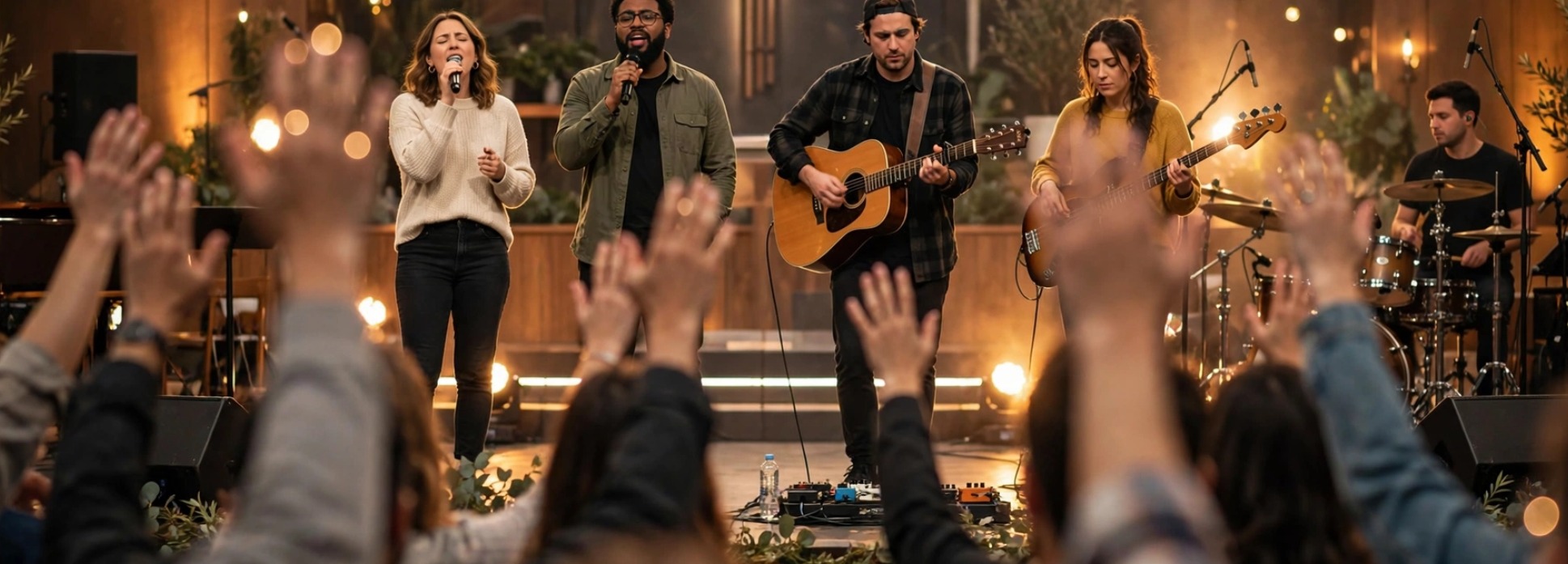
하나님을 예배하는 찬양대
A Choir Worshiping God
■ 본문 말씀: 역대상 25:1 (10월 17일 본문)
■ 포인트: 찬양은 단순한 노래가 아니라, 우리의 믿음을 고백하는 거룩한 예배의 행위입니다.
■ Scripture: 1 Chronicles 25:1 (Text for October 17)
■ Point: Praise is not mere singing, but a holy act of worship confessing our faith.
1. 찬양 (Praise)
감사함으로
감사함으로
2. 기도 (Prayer)
하나님, 저희가 바쁜 일상을 내려놓고 하나님께 나아갑니다. 몸과 마음을 하나님께 집중하게 하시고, 저희를 향한 하나님 뜻을 겸손히 배우게 해 주세요.
God, we lay down our busy daily lives and come to You. Help us focus our bodies and minds on You, and humbly learn Your will for us.
3. 말씀 (Word)
역대상 25:1을 함께 읽습니다. (말씀을 3번 읽으세요.)
* 말씀을 다른 번역으로 반복해서 읽으면 내용을 깊이 이해하는 데 도움이 됩니다.
Read 1 Chronicles 25:1 together (Read the scripture three times).
* Reading the scripture repeatedly in different translations helps you understand the content deeply.
□ 개역개정판 성경
1 다윗이 군대 지휘관들과 더불어 아삽과 헤만과 여두둔의 자손 중에서 구별하여 섬기게 하되 수금과 비파와 제금을 잡아 신령한 노래를 하게 하였으니 그 직무대로 일하는 자의 수효는 이러하니라
□ 우리말 성경
1 다윗은 군사령관들과 함께 아삽, 헤만, 여두둔의 아들 가운데 몇몇을 따로 세워 수금과 비파와 심벌즈의 반주에 맞춰 노래 부르며 예언하는 일을 맡겼습니다. 이 일을 맡은 사람의 수는 다음과 같습니다.
□ NIV
1 David, together with the commanders of the army, set apart some of the sons of Asaph, Heman and Jeduthun for the ministry of prophesying, accompanied by harps, lyres and cymbals.
□ ESV
1 David and the chiefs of the service also set apart for the service the sons of Asaph, and of Heman, and of Jeduthun, who prophesied with lyres, with harps, and with cymbals.
<단어 설명>
* 군사령관: 큰 군대를 맡아 이끄는 지휘관
* 비파: 울림통의 윗판은 평평하고 아랫판은 긴 복숭아 모양으로 된 둥근 현악기
* Commander: A commander who leads a large army
* Bipa: A round stringed instrument with a flat upper soundboard and a long, peach-shaped rounded lower body
4. 본문 이해 (Understanding the Scripture)
다윗은 하나님 찬양하는 일을 중요하게 생각했어요. 그래서 아삽과 헤만과 여두둔의 자손 가운데서 사람을 뽑아 찬양대를 세웠어요. 그들은 하나님 앞에서 악기를 연주하고, 하나님의 행하심과 말씀을 노래로 선포하는 일을 했어요. 찬양은 단순한 노래가 아니라 하나님께 사랑과 감사, 믿음을 드리는 예배예요.
David considered the work of praising God very important. So he chose people from among the descendants of Asaph, Heman, and Jeduthun and formed a choir. They played instruments before God and proclaimed God’s works and Word through song. Praise is not mere singing; it is worship that offers love, gratitude, and faith to God.
■ 인도자를 위한 본문 이해 (Understanding Scripture for the Leader)
다윗은 왕이 된 후 하나님 임재를 상징하는 ‘언약궤’를 예루살렘으로 옮겨 왔습니다. 그리고 이스라엘의 참된 왕이신 하나님을 예배하는 일이 공동체의 중심이 되도록 예배의 질서를 세워 갔습니다. 그는 제사장들과 레위인들에게 각기 맡은 직무를 분담하게 하여 예배가 질서 있게 드려지도록 했고, 하나님을 섬기는 일이 공동체 전체에 매우 중요한 일임을 드러냈습니다. 특별히 다윗은 찬양하는 사람들을 따로 구별해 세웠습니다. 하나님이 행하신 일을 기억하고, 그 은혜를 선포하며, 하나님께 영광을 돌리는 일이 매우 중요했기 때문입니다. 다윗은 레위 사람인 아삽과 헤만과 여두둔의 자손 가운데서 사람들을 세워 수금과 비파와 제금을 잡고 하나님을 찬양하게 했습니다. 역대상 25장은 그들의 이름과 수효까지 자세히 기록하고 있는데, 이는 찬양 사역이 결코 가볍거나 부수적인 일이 아니라 하나님께 드리는 예배의 중요한 부분이었음을 보여 줍니다. 찬양은 단순한 음악이 아닙니다. 찬양은 하나님을 높이고, 그분의 말씀과 행하심을 기억하며, 믿음을 고백하는 거룩한 예배의 행위입니다. 따라서 오늘 본문은 단순히 성전 음악대를 조직한 기록이 아니라, 하나님께 드리는 예배가 얼마나 소중하며 또 얼마나 질서 있게 준비되어야 하는지를 보여 줍니다.
After becoming king, David brought the ‘ark of the covenant,’ the symbol of God’s presence, to Jerusalem. He established the order of worship so that worshiping God, the true King of Israel, would stand at the center of the community. He assigned the priests and Levites their respective duties so that worship would be offered in an orderly way, showing that serving God was a matter of great importance for the whole community. In particular, David set apart those who praise. This was because remembering what God had done, proclaiming His grace, and giving Him glory was so important. David appointed people from among the descendants of Asaph, Heman, and Jeduthun, Levites, to praise God with harps, lyres, and cymbals. 1 Chronicles 25 records even their names and numbers in detail, showing that the ministry of praise was by no means a light or secondary matter but an important part of the worship offered to God. Praise is not mere music. Praise is a holy act of worship that exalts God, remembers His Word and works, and confesses faith. Therefore, today’s passage is not simply a record of organizing the temple choir; it shows how precious the worship offered to God is and how orderly it must be prepared.
5. 나눔 (Sharing)
1. 다윗은 아삽과 헤만과 여두둔의 자손 중에서 몇몇 사람을 구별해서 세우고 그들에게 어떤 일을 맡겼나요?(1절)
What work did David entrust to those he set apart from among the descendants of Asaph, Heman, and Jeduthun? (Verse 1)
■ 유아·유치 Kindergarten
다윗이 아삽과 헤만, 여두둔의 아들들에게 맡긴 일은 무엇이었나요?(1절)
What work did David entrust to the sons of Asaph, Heman, and Jeduthun? (Verse 1)
▒ 질문 가이드 (Question Guide)
다윗은 왕이 된 후에도 찬양과 예배를 소홀히 하지 않았다는 점을 상기시켜 주십시오. 그는 하나님을 사랑했고, 하나님을 찬양하고 예배하는 것을 통치의 우선순위에 두었기에 찬양대까지 특별히 조직하고, 그들로 하여금 하나님을 찬양하는 일을 따로 맡겼습니다. 그가 찬양대에게 맡긴 일이 무엇이었는지 1절에서 함께 찾아봅니다.
Remind them that David did not neglect praise and worship even after becoming king. Because he loved God and made praising and worshiping God a priority of his reign, he specially organized a choir and entrusted them with the work of praising God. Find together in verse 1 what work he entrusted to the choir.
▒ 인도자를 위한 해설 (Commentary for the Leader)
다윗이 아삽과 헤만과 여두둔의 자손들을 구별하여 세운 이유는, 하나님께 드리는 찬양과 예배가 매우 중요했기 때문입니다. 그래서 다윗은 아삽과 헤만과 여두둔의 자손들 중에서 찬양의 은사를 가진 사람들을 찬양대로 구별해 세워 예배를 섬기게 했습니다. 그들은 하나님 임재를 상징하는 언약궤 앞에서, 그리고 이후 솔로몬 때 지어질 성전에서 하나님을 찬양하도록 특별히 선정된 자들입니다. 찬양대는 아침저녁에 드리는 제사와 매 절기 때마다 행하는 제사에서 찬양하는 일을 맡았습니다. 찬양은 단순한 노래나 악기 연주가 아니라, 하나님의 영광을 높이고 하나님의 말씀과 행하심을 선포하는 영적인 일입니다. 그래서 역대기 기자는 이를 ‘신령한 노래’라고 표현합니다. 개역개정 성경에서 ‘신령한 노래’에 해당하는 히브리어는 ‘나바’로, 이는 ‘예언하다’라는 뜻이 있습니다. 찬양은 하나님 말씀과 행하심을 선포하는 예언적 성격을 지니고 있습니다. 그래서 찬양하는 사람들은 하나님을 높이며 믿음을 선포하는 귀한 역할을 감당했습니다.
The reason David set apart the descendants of Asaph, Heman, and Jeduthun was that praise and worship offered to God was very important. So David set apart those with the gift of praise from among the descendants of Asaph, Heman, and Jeduthun as a choir to serve in worship. They were specially chosen to praise God before the ark of the covenant, the symbol of God’s presence, and later in the temple to be built in Solomon’s time. The choir was entrusted with praising at the sacrifices offered morning and evening and at the sacrifices held at each festival. Praise is not mere singing or instrumental playing; it is a spiritual work that exalts God’s glory and proclaims God’s Word and works. That is why the Chronicler calls it ‘spiritual songs.’ The Hebrew word for ‘spiritual songs’ in the Korean Revised Version is ‘naba,’ which means ‘to prophesy.’ Praise has a prophetic character that proclaims God’s Word and works. So those who praise carry out the precious role of exalting God and proclaiming faith.
2. 나는 찬양을 즐거워하나요? 어떤 마음으로 드리는 찬양을 하나님이 가장 기뻐하실지 함께 나누고, 한 가지씩 실천해 보세요.
Do I enjoy praising? Share together what kind of heart in praise God would be most pleased with, and practice one thing each.
■ 유아·유치 Kindergarten
지난 주일 예배 시간에 부른 찬양이 무엇이었는지 나누고 함께 불러 보세요.
Share what praise song was sung during last Sunday’s worship and sing it together.
▒ 질문 가이드 (Question Guide)
찬양은 예배에서 중요한 요소입니다. 찬양이 일반적인 노래와는 다르다는 사실을 분명히 깨닫게 해 주십시오. 또한 찬양의 의미와 중요성을 마음에 새기도록 이끌어 주십시오. 찬양은 단순히 곡조를 따라 부르는 시간이 아니라, 하나님이 행하신 일을 기억하고 우리의 믿음과 헌신을 고백하는 시간입니다. 찬양은 곡조 있는 기도와도 같습니다. 찬양을 드리는 시간에 각자가 어떤 마음으로 찬양하고 있는지 함께 나누어 봅니다. 하나님은 우리가 찬양을 얼마나 잘하는가보다 우리의 중심을 보십니다. 내가 어떤 마음으로 찬양할 때 하나님이 가장 기뻐하실지 나누어 봅니다. 그리고 각자 자신이 실천할 한 가지를 나누어 보게 합니다. 예를 들어, “가사의 뜻을 생각하며 찬양하겠습니다.”, “찬양 시간에 장난치지 않고 정성껏 찬양하겠습니다”, “소리 높여 기쁘게 찬양하겠습니다.” 등. 그 마음으로 마침 기도 후에 마지막 찬양을 함께 부르도록 합니다.
Praise is an important element of worship. Help them clearly realize that praise is different from ordinary songs. Also lead them to engrave the meaning and importance of praise in their hearts. Praise is not merely a time to sing along to a melody, but a time to remember what God has done and confess our faith and devotion. Praise is like a prayer with a melody. During the time of praise, share together with what heart each person is praising. God looks at our hearts more than how well we praise. Share what kind of heart in praise would please God most. And have each person share one thing they will practice. For example, “I will praise while thinking about the meaning of the lyrics,” “I will praise wholeheartedly without playing around during praise time,” “I will praise joyfully with a loud voice,” etc. With that heart, after the closing prayer, sing the final praise together.
6. 감사하기 (Gratitude)
하나님께 감사드리고 싶은 일을 세 가지 정도 기록하게 한 후에 함께 나눕니다. 일상에서 경험한 크고 작은 감사나 예배 중에 생각난 감사를 나누어도 되고, 평범한 일상을 누리게 하시는 은혜에 대한 감사를 나누어도 됩니다. 감사를 나눔으로 하나님 은혜를 기억하고 하나님 중심의 삶을 훈련하게 됩니다.
Write down about three things you want to thank God for and share them together. You can share big and small thanks experienced in daily life, thanks that came to mind during worship, or thanks for the grace of enjoying an ordinary daily life. By sharing gratitude, we remember God’s grace and practice living a God-centered life.
7. 기도 (Prayer)
하나님! 찬양이 단순한 노래가 아니라, 거룩한 예배임을 깨닫게 해 주시니 감사합니다. 찬양할 때마다 하나님의 은혜를 기억하고 기쁘게 찬양할 수 있길 원합니다. 저희의 믿음과 사랑을 찬양에 담아서 드리도록 이끌어 주세요.
God! Thank You for letting us realize that praise is not mere singing, but holy worship. Whenever we praise, help us remember God’s grace and praise with joy. Lead us to offer our faith and love in our praise.
‘주님이 가르쳐 주신 기도’로 가정예배를 마칩니다.
End the family worship with the Lord’s Prayer.
8. 가족 미션 (Family Mission)
<<찬양 가사 속 믿음 보물찾기>>
* 준비물: * 준비물: 새 찬양 악보(인터넷에서 출력), A4용지 혹은 스케치북, 필기도구, 스티커
1. 익숙하지 않은 새 찬양 한 곡을 정합니다. 가족이 꼭 함께 익혀 부르고 싶은 곡으로 선정해 주세요. 미취학 아동이 있다면 가사가 단순한 곡으로 선택합니다.
2. 인터넷 사이트를 활용해 선정한 새 찬양을 함께 들어봅니다.
3. 악보를 출력한 후, 가족이 함께 악보를 보며 따라 불러 보는 것도 좋습니다.
4. 가족이 찬양을 익히는 동안 인도자는 A4용지 또는 스케치북에 가사를 적습니다. 이때 중요한 단어 몇 개는 빈칸으로 남겨 둡니다.
5. 인도자는 빈칸이 기록된 A4용지 또는 스케치북을 들고, 퀴즈 형식으로 어떤 단어가 들어갈지 맞혀 보게 합니다.
6. 마지막으로 가사의 뜻을 생각하며 찬양을 한 번 더 부르고 마무리합니다. 찬양을 단순히 따라 부르는 데서 끝나지 않도록 하고, 가사를 효과적으로 익히며 그 뜻을 생각하고 마음으로 고백할 수 있도록 도와주시기 바랍니다.
<<Finding Faith Treasures in the Praise Lyrics>>
* Materials: * Materials: New praise sheet music (printed from the internet), A4 paper or a sketchbook, writing tools, stickers
1. Choose an unfamiliar new praise song — one your family wants to learn and sing together. If you have a preschooler, choose a song with simple lyrics.
2. Listen to the chosen new praise song together using an internet site.
3. After printing the sheet music, sing along together while looking at the sheet music.
4. While the family is learning the praise song, the leader writes the lyrics on A4 paper or a sketchbook, leaving a few important words blank.
5. The leader holds up the paper with the blanks and has everyone guess which words belong in the blanks, quiz style.
6. Finally, sing the praise song once more while thinking about the meaning of the lyrics, and finish. Help everyone learn the lyrics well, reflect on their meaning, and confess them from the heart — not merely sing along.
▒ 주일예배 준비하기 (Preparing Sunday Service)
가정예배를 마친 후에는 함께 주일예배를 준비합니다. After family worship, prepare for Sunday service together.
1. 부모는 자녀에게 주일의 중요성과 예배의 소중함을 일깨워 줍니다.
– Parents remind their children of the importance of Sunday and the value of worship.
2. 마음으로 주일예배를 준비합니다. 하나님께 집중하도록 주일에는 가급적 다른 일을 만들지 않습니다.
– Prepare for Sunday service with your heart. Avoid distractions on Sunday so that you can focus on God.
3. 하나님 앞에 드릴 헌금을 정성스럽게 준비합니다.
– Prepare offering wholeheartedly.
4. 단정한 옷을 준비합니다.
– Prepare neat clothes.
5. 하나님이 기쁘게 받으시는 주일예배가 되도록 기도합니다.
– Pray for a Sunday service that is pleasing to God.

0 responses on "10월 셋째 주. 하나님을 예배하는 찬양대"