

■ 본문 말씀: 여호수아 20:7-9 (12월 17일 본문)
■ 포인트: 하나님은 우리의 실수를 이해하시고 용서해 주시는 분이에요.
Scripture Passage: Joshua 20:7–9 (Passage for December 17)
Key Point: God understands our mistakes and forgives us.
1. 찬양 (Praise)
주의 보좌로 나아갈 때에
십자가 그 보혈(어린이)
2. 기도 (Prayer)
하나님, 크신 사랑으로 함께해 주시니 감사합니다. 저희가 마음 다해 하나님을 사랑하고 예배하며, 예배 속에서 사랑의 하나님을 더욱더 닮아 가게 해 주세요.
God, thank You for being with us in Your great love. Help us to love You and worship You with all our hearts, and through worship, allow us to become more and more like You, the God of love.
3. 말씀 (Word)
여호수아 20:7~9을 함께 읽습니다(말씀을 3번 읽으세요).
* 말씀을 다른 번역으로 반복해서 읽으면 내용을 깊이 이해하는 데 도움이 됩니다.
Read Joshua 20:7–9 together three times.
Reading the passage repeatedly in different translations helps deepen understanding of the message.
□ 개역개정판 성경
7 이에 그들이 납달리의 산지 갈릴리 게데스와 에브라임 산지의 세겜과 유다 산지의 기럇아르바 곧 헤브론과 8 여리고 동쪽 요단 저쪽 르우벤 지파 중에서 평지 광야의 베셀과 갓 지파 중에서 길르앗 라못과 므낫세 지파 중에서 바산 골란을 구별하였으니 9 이는 곧 이스라엘 모든 자손과 그들 중에 거류하는 거류민을 위하여 선정된 성읍들로서 누구든지 부지중에 살인한 자가 그리로 도망하여 그가 회중 앞에 설 때까지 피의 보복자의 손에 죽지 아니하게 하기 위함이라
□ 우리말 성경
7 그리하여 그들은 납달리 산지의 갈릴리 게데스, 에브라임 산지의 세겜, 유다 산지의 기럇아르바, 곧 헤브론을 *지정했습니다. 8 여리고의 요단 동쪽에는 르우벤 지파의 평지 광야의 베셀, 갓 지파의 길르앗 라못, 므낫세 지파의 바산 골란을 지정했습니다. 9 이곳은 모든 이스라엘 사람들이나 그들 가운데 사는 이방 사람 가운데 누군가를 우연히 죽인 사람을 위해 정해 놓은 성들로 거기에 있으면 회중 앞에 서기 전에 피로 복수하는 사람에게 죽임당하는 일을 *면할 수 있었습니다.
□ NIV
7. So they set apart Kedesh in Galilee in the hill country of Naphtali, Shechem in the hill country of Ephraim, and Kiriath Arba (that is, Hebron) in the hill country of Judah.
8. On the east side of the Jordan of Jericho they designated Bezer in the desert on the plateau in the tribe of Reuben, Ramoth in Gilead in the tribe of Gad, and Golan in Bashan in the tribe of Manasseh.
9. Any of the Israelites or any alien living among them who killed someone accidentally could flee to these designated cities and not be killed by the avenger of blood prior to standing trial before the assembly.
□ ESV
7 So they set apart Kedesh in Galilee in the hill country of Naphtali, and Shechem in the hill country of Ephraim, and Kiriath-arba (that is, Hebron) in the hill country of Judah. 8 And beyond the Jordan east of Jericho, they appointed Bezer in the wilderness on the tableland, from the tribe of Reuben, and Ramoth in Gilead, from the tribe of Gad, and Golan in Bashan, from the tribe of Manasseh. 9 These were the cities designated for all the people of Israel and for the stranger sojourning among them, that anyone who killed a person without intent could flee there, so that he might not die by the hand of the avenger of blood, till he stood before the congregation.
<단어 설명> Vocabulary
* 지정: 특별한 지위나 자격을 가지도록 정하는 것
* 면하다: (책임이나 의무를) 지지 않게 됨, (어려운 처지를) 벗어남
4. 본문 이해 (Understanding the Scripture)
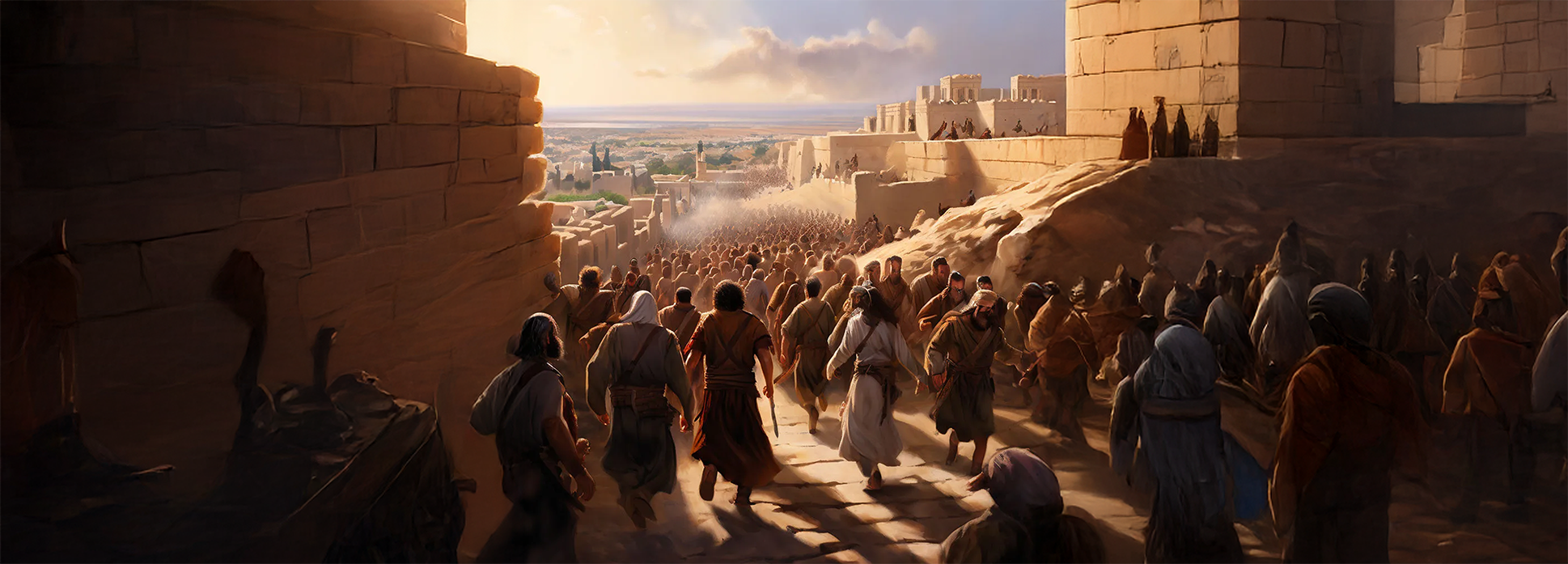
하나님은 실수로 사람을 죽인 이가 억울하게 희생되지 않는 길을 마련해 주셨어요. 이스라엘 백성이 거주하는 땅 여섯 군데에 도피성을 정해 주시고, 실수로 사람을 죽인 경우 공정한 재판을 받기까지 그곳에 머물러 생명을 보존하게 하셨어요. 도피성 제도에는 하나님의 공의와 자비가 담겨 있어요.
God provided a way so that a person who killed someone accidentally would not suffer unjustly. He designated six cities of refuge within the land where the Israelites lived. If someone caused a death by mistake, that person could stay in one of these cities to preserve their life until a fair trial took place. The system of the cities of refuge reveals both God’s justice and His mercy.
■ 인도자를 위한 본문 이해 (Understanding Scripture for the Leader)
하나님은 이스라엘 백성이 거주하는 곳에 도피성을 마련하라고 명령하셨어요(민 35:9~15; 수 20:2~3). 이는 부지중에 혹은 우발적으로 살인을 저지른 사람을 위한 제도예요. 실수로 살인을 저지른 사람이 재판 절차 없이 보복당하는 일을 막기 위한 것이지요. 실수로 사람을 죽인 경우에는 두 차례 재판을 받아야 했어요. 도피성에 들어가기 전 성문 앞에서 장로들에게 이 사실을 말한 뒤 판단을 받았고, 이후 회중 앞에서 정식 재판을 받았어요. 실수로 살인한 사람이 도피성으로 들어가면 누구도 강제로 끌어낼 수 없었어요. 회중 앞에서 재판한 후 무죄로 판결되면 도피성에서 지낼 수 있었고, 그곳 대제사장이 죽으면 속죄받은 것으로 간주되어 도피성에서 나올 수 있었어요(민 35:24~25; 수 20:6). 하나님은 연약한 사람이 실수할 수 있다는 것을 잘 알고 계세요. 그래서 도피성 제도를 통해 실수로 살인을 저지른 사람이 공의로운 재판을 받을 수 있도록 은혜를 베풀어 주셨어요. 공의의 하나님은 긍휼의 하나님이세요. 그 사랑과 은혜가 예수 그리스도를 통해 우리에게도 흐르고 있음을 기억하세요.
God commanded the Israelites to establish cities of refuge in the land where they lived (Numbers 35:9–15; Joshua 20:2–3). This system was designed for those who committed manslaughter unintentionally or by accident. Its purpose was to prevent someone who caused a death unintentionally from being killed in revenge without due process.
A person who killed someone accidentally had to undergo two stages of judgment. First, upon arriving at the city gate, the person presented the case to the elders and received an initial assessment. Later, a formal trial took place before the assembly. Once the person entered a city of refuge, no one was allowed to forcibly remove them. If the assembly found the person innocent of intentional murder, they were permitted to remain in the city of refuge. When the high priest of that time died, the person was considered atoned for and could safely leave the city (Numbers 35:24–25; Joshua 20:6).
God fully understands that human beings are weak and capable of making mistakes. Through the system of the cities of refuge, He showed grace by ensuring that those who committed accidental manslaughter could receive a just and fair trial. The God of justice is also the God of mercy. Remember that this same love and grace now flow to us through Jesus Christ.
“여호와께서 또 모세에게 말씀하여 이르시되 이스라엘 자손에게 말하여 그들에게 이르라 너희가 요단강을 건너 가나안 땅에 들어가거든 너희를 위하여 성읍을 도피성으로 정하여 부지중에 살인한 자가 그리로 피하게 하라 이는 너희가 복수할 자에게서 도피하는 성을 삼아 살인자가 회중 앞에 서서 판결을 받기까지 죽지 않게 하기 위함이니라 너희가 줄 성읍 중에 여섯을 도피성이 되게 하되 세 성읍은 요단 이쪽에 두고 세 성읍은 가나안 땅에 두어 도피성이 되게 하라 이 여섯 성읍은 이스라엘 자손과 타국인과 이스라엘 중에 거류하는 자의 도피성이 되리니 부지중에 살인한 모든 자가 그리로 도피할 수 있으리라”(민 35:9~15).
9. Then the LORD said to Moses:
10. “Speak to the Israelites and say to them: ‘When you cross the Jordan into Canaan,
11. select some towns to be your cities of refuge, to which a person who has killed someone accidentally may flee.
12. They will be places of refuge from the avenger, so that a person accused of murder may not die before he stands trial before the assembly.
13. These six towns you give will be your cities of refuge.
14. Give three on this side of the Jordan and three in Canaan as cities of refuge.
15. These six towns will be a place of refuge for Israelites, aliens and any other people living among them, so that anyone who has killed another accidentally can flee there.
(Numb. 35:9-15)
“이스라엘 자손에게 말하여 이르기를 내가 모세를 통하여 너희에게 말한 도피성들을 너희를 위해 정하여 부지중에 실수로 사람을 죽인 자를 그리로 도망하게 하라 이는 너희를 위해 피의 보복자를 피할 곳이니라”(수 20:1~2).
1. Then the LORD said to Joshua:
2. “Tell the Israelites to designate the cities of refuge, as I instructed you through Moses, (Jsh. 20:1-2)
“회중이 친 자와 피를 보복하는 자 간에 이 규례대로 판결하여 피를 보복하는 자의 손에서 살인자를 건져 내어 그가 피하였던 도피성으로 돌려보낼 것이요 그는 거룩한 기름 부음을 받은 대제사장이 죽기까지 거기 거주할 것이니라”(민 35:24~25).
24. the assembly must judge between him and the avenger of blood according to these regulations.
25. The assembly must protect the one accused of murder from the avenger of blood and send him back to the city of refuge to which he fled. He must stay there until the death of the high priest, who was anointed with the holy oil. (Num. 35:24-25)
“그 살인자는 회중 앞에 서서 재판을 받기까지 또는 그 당시 대제사장이 죽기까지 그 성읍에 거주하다가 그 후에 그 살인자는 그 성읍 곧 자기가 도망하여 나온 자기 성읍 자기 집으로 돌아갈지니라 하라 하시니라”(수 20:6).
6. He is to stay in that city until he has stood trial before the assembly and until the death of the high priest who is serving at that time. Then he may go back to his own home in the town from which he fled.” (Jsh. 20:6)
5. 나눔 (Sharing)
1. 하나님이 이스라엘 가운데 도피성 여섯 개를 지정해 주신 것은 어떤 사람들을 위해서였나요?(9절)
For whom did God designate the six cities of refuge among the Israelites? (v. 9)
■ 저학년 Elementary
하나님이 여호수아에게 도피성을 만들게 하신 이유는 무엇인가요? (9절)
Why did God command Joshua to establish the cities of refuge? (v. 9)
■ 유아·유치 Kindergarten
도피성은 어떤 사람을 위한 곳인가요? (9절)
Who are the cities of refuge for? (v. 9)
▒ 질문 가이드 (Question Guide)
도피성으로 지정된 여섯 지역에 동그라미를 표시해 보세요(7~8절). 그리고 9절을 함께 읽으며 하나님은 결과보다 동기를 보시고, 징계보다 회복의 기회를 주시는 분이심을 설명해 주세요.
Have everyone circle the six regions designated as cities of refuge (vv. 7–8). Then read verse 9 together and explain that God looks not only at outcomes but also at motives, and that He gives opportunities for restoration rather than focusing only on punishment.
▒ 인도자를 위한 해설 (Commentary for the Leader)
도피성은 요단강을 중심으로 동쪽에 세 곳, 서쪽에 세 곳이 있었는데, 실수로 살인한 사람이 어디서나 하루 만에 도달할 수 있는 거리에 있었어요. 도피성은 실수로 살인한 사람을 보호하고 정당한 재판을 받게 해 주는 제도였어요. 율법은 상대방이 저지른 죄에 대해 ‘눈에는 눈, 이에는 이’(출 24:23~25)라는 동해보복법을 적용해요. 이는 고대 근동 지역에서 사회 질서를 유지하기 위해 시행하던 법이에요(고대 바벨론의 함무라비 법전). 하나님은 죄에 대해 무서운 심판을 내리시지만 심판 중에도 긍휼을 잊지 않으시는 분이에요. 그리고 사람의 실수까지 고려해 정당한 재판을 받게 하시는 공의로운 분이에요. 결과도 중요하지만, 하나님은 마음의 동기 또한 살펴보세요.
There were six cities of refuge in total—three on the east side of the Jordan River and three on the west—located so that a person who had killed someone accidentally could reach one within a day from anywhere. The cities of refuge were established to protect those who committed manslaughter unintentionally and to ensure they received a fair trial.
Under the Law, the principle of retribution—“eye for eye, tooth for tooth” (Exodus 21:23–25)—was applied to crimes. This principle was common in the ancient Near East as a way to maintain social order (for example, in the Babylonian Code of Hammurabi). While God brings serious judgment against sin, He does not forget mercy even in judgment. He is a God of justice who also takes human mistakes into account and ensures fair legal process. While outcomes matter, God also examines the motives of the heart.
“그러나 다른 해가 있으면 갚되 생명은 생명으로, 눈은 눈으로, 이는 이로, 손은 손으로, 발은 발로, 덴 것은 덴 것으로, 상하게 한 것은 상함으로, 때린 것은 때림으로 갚을지니라”(출 21:23~25).
23. But if there is serious injury, you are to take life for life,
24. eye for eye, tooth for tooth, hand for hand, foot for foot,
25. burn for burn, wound for wound, bruise for bruise. (Exd. 21:23-25)
2. 하나님은 결과보다 그 일의 동기를 살피시는 분이에요. 하나님을 닮은 자녀답게 내가 용서할 일은 무엇이고, 내가 다시 기회를 줄 사람은 누구인가요?
God examines motives more than results. As children who seek to reflect God’s character, what is something I need to forgive, and who is someone I should give another chance to?
■ 저학년 Elementary
가족이나 친구가 나에게 실수를 저질러 피해를 주었을 때 나는 어떻게 대해야 할까요?
When a family member or friend makes a mistake that causes me harm, how should I respond?
■ 유아·유치 Kindergarten
내게 잘못한 친구가 “미안해”라고 말할 때 나는 어떻게 대답해야 할까요?
When a friend who hurt me says, “I’m sorry,” how should I answer?
▒ 질문 가이드 (Question Guide)
각자 하나님께 받은 은혜가 무엇인지 생각해 보세요. 그 은혜를 기억하며 다른 사람의 실수에 너그러워야 한다는 것을 생각하게 해 주세요. 무엇보다 예수님이 우리의 모든 죄를 값없이 용서해 주셨다는 사실을 마음에 새기게 해 주세요.
Invite everyone to think about the grace each person has received from God. Help them remember that, because of this grace, we should be generous toward others’ mistakes. Above all, impress upon their hearts that Jesus freely forgave all our sins.
▒ 인도자를 위한 해설 (Commentary for the Leader)
우리가 실수로 죄를 지으면 하나님은 우리에게 잘못을 돌아볼 시간과 돌이킬 기회를 주세요. 하나님은 우리가 죄인임에도 불구하고 아들 예수님을 보내 십자가에서 우리 대신 죽게 하심으로써 속죄의 은혜를 베푸셨어요. 일상에서 우리는 다른 사람의 크고 작은 실수로 인해 어려움을 당할 때가 있어요. 반대로 나의 실수로 다른 사람에게 피해를 줄 때도 있어요. 하나님이 베푸신 대속의 은혜를 알고 고백하는 우리는 다른 사람의 실수와 잘못을 너그러운 마음으로 대할 수 있어야 해요. 도피성 제도에 나타나는 하나님의 공의와 사랑을 삶에서 실천할 수 있도록 서로의 상황을 나누며 다짐해 보세요.
When we sin by mistake, God gives us time to reflect on our wrongdoing and an opportunity to turn back. Even though we are sinners, God poured out His grace of atonement by sending His Son Jesus to die in our place on the cross. In daily life, we often suffer because of others’ big or small mistakes, and at times our own mistakes cause harm to others. Those who know and confess the redeeming grace God has given us are called to respond to others’ failures and faults with a generous heart. Encourage participants to share their situations and make commitments to live out God’s justice and love as revealed in the system of the cities of refuge.
6. 감사하기 (Gratitude)
우리의 실수를 용납해 주시는 하나님께 감사드리세요.
Give thanks to God, who accepts and forgives our mistakes.
7. 기도 (Prayer)
하나님, 도피성 제도를 통해 진정한 공의가 무엇인지 깨닫습니다. 또한 실수한 사람에게 기회를 주시는 사랑을 깨닫습니다. 먼저 용서받은 죄인임을 기억하며 저희가 다른 사람의 실수를 너그러운 마음으로 받아들이게 해 주세요.
God, through the system of the cities of refuge, we come to understand what true justice is. We also recognize Your love that gives opportunities to those who have made mistakes. Help us remember that we are sinners who have been forgiven first, and enable us to receive the mistakes of others with generous and gracious hearts.
‘주님이 가르쳐 주신 기도’로 가정예배를 마칩니다.
End the family worship with the Lord’s Prayer.
8. 가족 미션 (Family Mission)
‘하나님께 피해요’
<기도하는 집 만들기>
* 준비물: 커다란 상자, 작은 방석, 색칠 도구, 색 시트지, 칼, 셀로판테이프(박스용), 종이, 유성 매직, 우드락, 글루건, 방석, 작은 탁자, 성경책
1. 커다란 상자는 셀로판테이프로 다시 한번 붙여서 형태를 잡습니다.
2. 문과 창문을 낼 곳을 표시한 후 칼로 오립니다.
3. 우드락으로 문고리와 창틀을 만들어 글루건으로 붙입니다.
4. 완성한 기도의 집 안에 방석과 작은 탁자를 넣고 그 위에 성경책을 올려 둡니다.
5. 기도의 집을 어떻게 활용할지 가족이 함께 논의한 후, 약속한 시간을 종이에 적어 붙입니다.
Tip. 색칠할 수 있는 대형 종이집을 구매하고, 색칠 도구만 준비해 꾸며도 좋습니다.
어려움을 당할 때 하나님께 피하는 것이 가장 안전하다는 것을 얘기해 주세요. 기도로 하나님께 어려운 상황을 말씀드릴 수 있고, 또 성경 말씀을 묵상하며 하나님의 인도하심을 받을 수 있어요. 기도의 집이 하나님을 더 가까이 만나는 장소가 되도록 다양한 용도로 활용해 보세요.
<Take Refuge in God>
Build a House of Prayer
Preparation: A large cardboard box, small cushions, coloring supplies, colored adhesive sheets, a utility knife, packing tape (for boxes), paper, permanent marker, foam board, hot glue gun, cushions, a small table, and a Bible.
1. Reinforce the large box with packing tape to secure its shape.
2. Mark where the door and windows will go, then carefully cut them out.
3. Create a doorknob and window frames using foam board and attach them with a hot glue gun.
4. Place cushions and a small table inside the finished prayer house, and set a Bible on the table.
5. As a family, discuss how you will use the prayer house. Write down the agreed-upon times or purposes on paper and post it inside.
Tip: You may also purchase a large, colorable cardboard playhouse and decorate it using only coloring supplies.
Explain that turning to God in times of difficulty is the safest refuge. Through prayer, we can bring our struggles to God, and by meditating on Scripture, we can receive His guidance. Use the house of prayer in various ways so it becomes a special place where your family can draw closer to God.
▒ 주일예배 준비하기 (Preparing Sunday Service)
가정예배를 마친 후에는 함께 주일예배를 준비합니다. After family worship, prepare for Sunday service together.
1. 부모는 자녀에게 주일의 중요성과 예배의 소중함을 일깨워 줍니다. – Parents remind their children of the importance of Sunday and the value of worship.
2. 마음으로 주일예배를 준비합니다. 하나님께 집중하도록 주일에는 가급적 다른 일을 만들지 않습니다.– Prepare for Sunday service with your heart. Avoid distractions on Sunday so that you can focus on God.
3. 하나님 앞에 드릴 헌금을 정성스럽게 준비합니다. – Prepare offering wholeheartedly.
4. 단정한 옷을 준비합니다.– Prepare neat clothes.
5. 하나님이 기쁘게 받으시는 주일예배가 되도록 기도합니다. – Pray for a Sunday service that is pleasing to God.
12월 14, 2025